Short story · 5 min · 2026
After Hours
Rain on the glass, pie under a pendant, a counter that never closes.
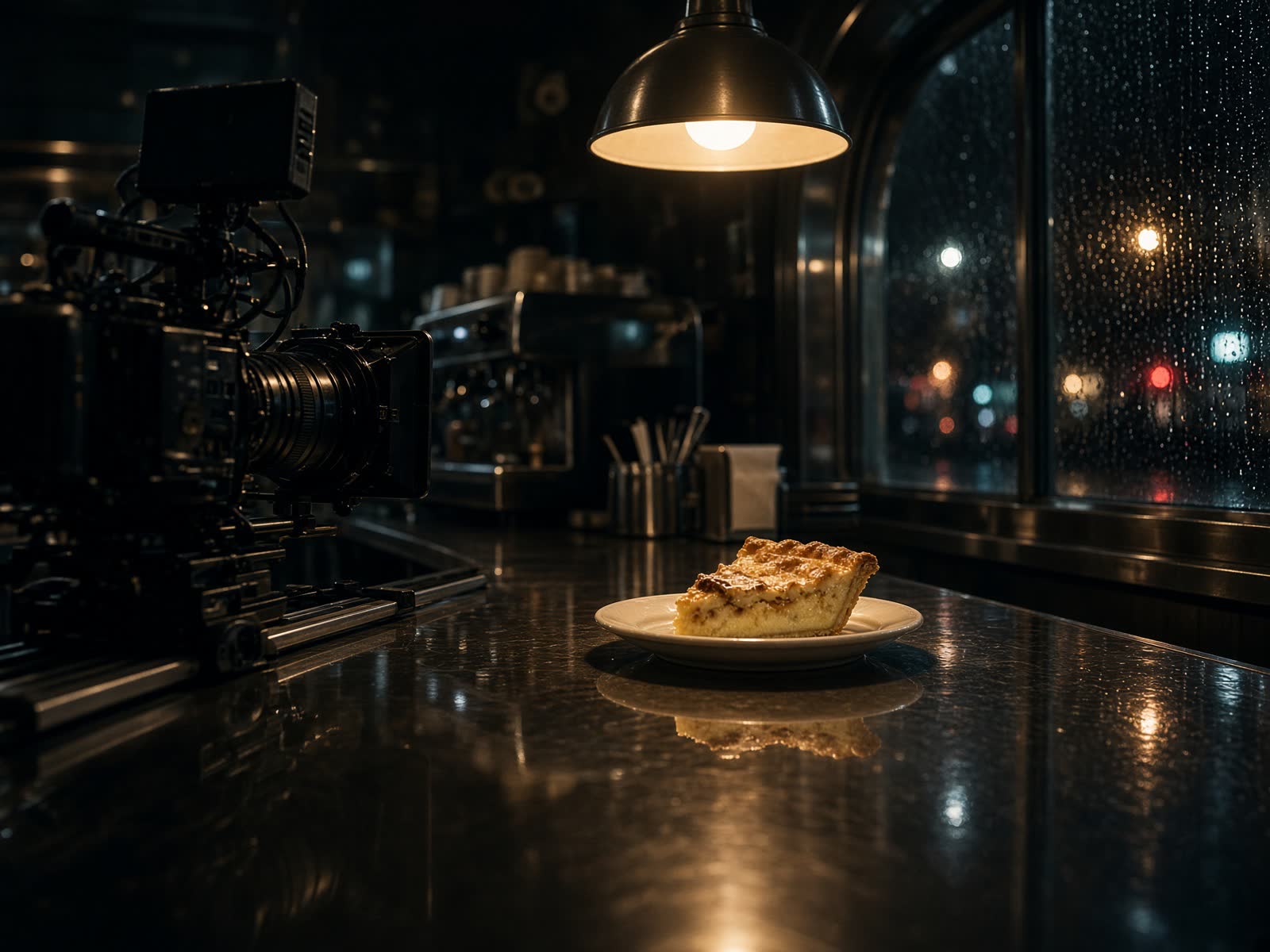
The pie was a prop and they both knew it. Cherry, one slice, under a pendant that had been humming since the second Bush. Rain made a film of the window so the street was a rumor. It was three-seventeen. The grill was already clean.
Lenore poured the coffee anyway. The man on the stool had the posture of someone who had been told to wait and had taken the instruction too literally. Coat still on. Ticket in his left hand, folded small, as if the bus might come through the door and need to see it up close.
There is no bus at three-seventeen. There has not been a bus at three-seventeen since the city decided night was a luxury. Lenore had the schedule taped inside the pastry case, more as a joke than a service.
He ate nothing. He watched the rain. When she refilled him he said thank you in a way that made the word sound like it had been expensive to buy and he did not want to waste it.
At three-forty he put a key on the counter next to the plate. Not slid — placed, the way you put down a thing you have been holding too long. Brass. No fob. The kind of key that belongs to a lock that has outlived the person who named it.
I missed my stop, he said. A long time ago.
Lenore did not pick up the key. She had a policy about objects left at the counter: wallets to the register, phones to the office, keys to the dish bin if they looked like they wanted to start a story. This one looked like it wanted to finish one.
The diner had been her father's. The apartment above it too. She still slept there on nights the rain was this loud, which was a way of saying she slept there most nights. There was a lock on the stairwell she had not used since the funeral because using it meant admitting the building was a place that could be closed.
He stood, left the pie, left the ticket, left the key. The bell over the door made its small, loyal sound. She watched him cross the wet street toward a stop where the sign had been stolen in April. He did not look back. People who look back are still deciding.
Lenore turned the key in her palm. It was warm. She walked to the stairwell, fitted it, and felt the tumblers stand up like they had been waiting for a name. The door opened on the smell of the upstairs: dust, coffee, a life paused mid-sentence. She did not go in. She locked it again, put the key in the register beside the tens, and poured the rest of the pot down the sink because morning was coming and morning was a kind of bus that did run.